
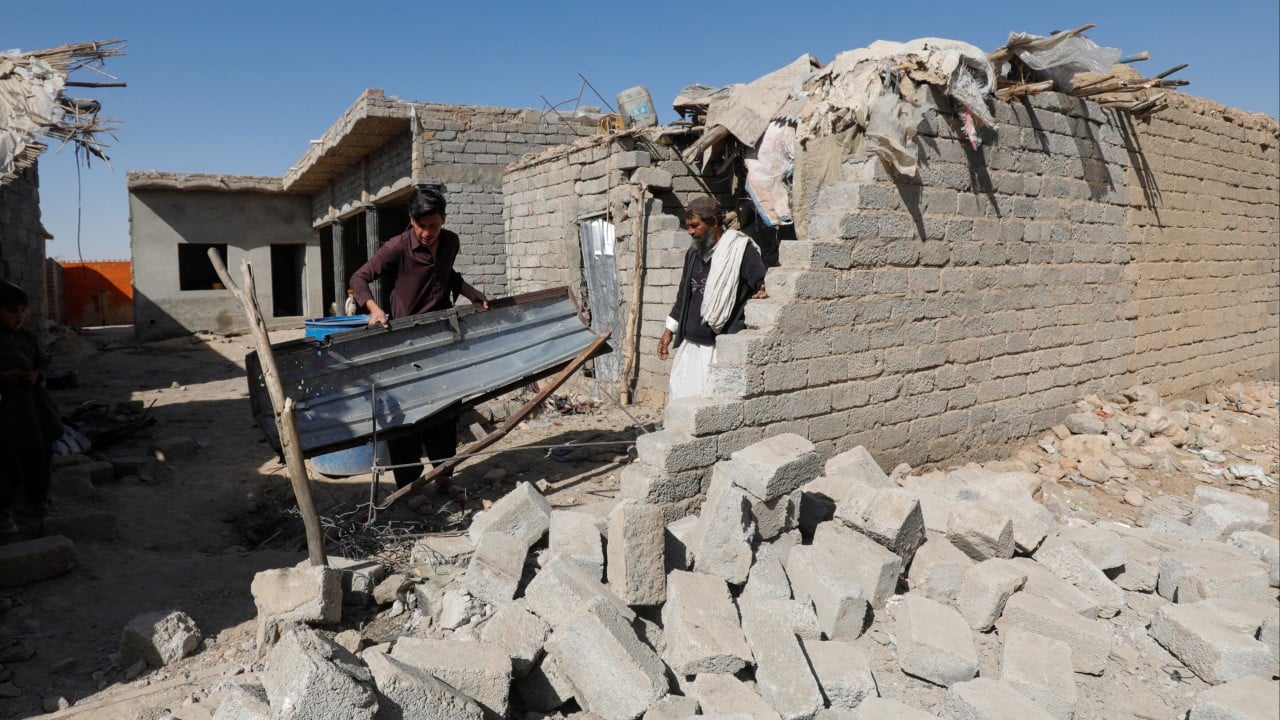
On Saturday, Pakistan's President Asif Ali Zardari issued a stark warning to the Afghan Taliban, stating that their drone attacks on Pakistani civilians had "crossed a red line." This escalation in the conflict between the two nations comes as the international community is increasingly concerned about regional stability. The situation is complex, with both countries trading accusations and denials of targeting civilians.
The conflict between Pakistan and the Afghan Taliban has been simmering for months, with tensions boiling over into cross-border clashes. The Afghan Taliban has accused Pakistan of conducting airstrikes in Kabul and other areas, resulting in civilian casualties. Pakistan, on the other hand, claims its operations are focused on Pakistani Taliban militants and their support networks. The international community, including China and the US, has been attempting to broker a ceasefire, but so far, these efforts have been unsuccessful.
A closer examination of the sources reveals that the Associated Press and SCMP report similar details of the conflict, including the drone attacks and the accusations exchanged between Pakistan and the Afghan Taliban. However, the DW News report provides additional information on the Pakistani military's interception of the drones and the subsequent debris causing injuries to civilians. The various sources also highlight the complexities of the conflict, with the Afghan Taliban denying harboring militant groups and Pakistan accusing them of doing so.
The situation is further complicated by the involvement of other regional players, including India and China. Pakistan has long accused the Afghan Taliban of allying with India, its arch-rival, while China has been attempting to broker a peaceful resolution to the conflict. The US, meanwhile, is embroiled in a separate conflict in the region, the war with Iran, which has added to the regional instability.
As the conflict continues to escalate, it is essential to consider the second-order effects of the situation. The ongoing fighting has already resulted in significant civilian casualties, with at least 75 civilians killed in Afghanistan and over 190 injured, according to the UNAMA. The humanitarian situation is likely to worsen if the conflict is not brought under control soon.
One of the critical questions that remains unanswered is what the international community can do to bring about a lasting ceasefire. China's Foreign Minister Wang Yi has urged for a peaceful resolution, but so far, these efforts have been unsuccessful. The US, as a key player in the region, must also consider its role in bringing stability to the area.
Looking ahead, the situation is likely to remain volatile, with both sides dug in and refusing to back down. The next few days will be crucial, as the international community waits to see if the Afghan Taliban will heed Pakistan's warning and cease its drone attacks. If not, the conflict may escalate further, drawing in other regional players and potentially destabilizing the entire region.
In terms of what's missing from the coverage, it would be helpful to have more information on the perspectives of ordinary Afghans and Pakistanis, who are caught in the middle of the conflict. Their stories and experiences could provide valuable insights into the human cost of the war and the challenges of finding a peaceful resolution.