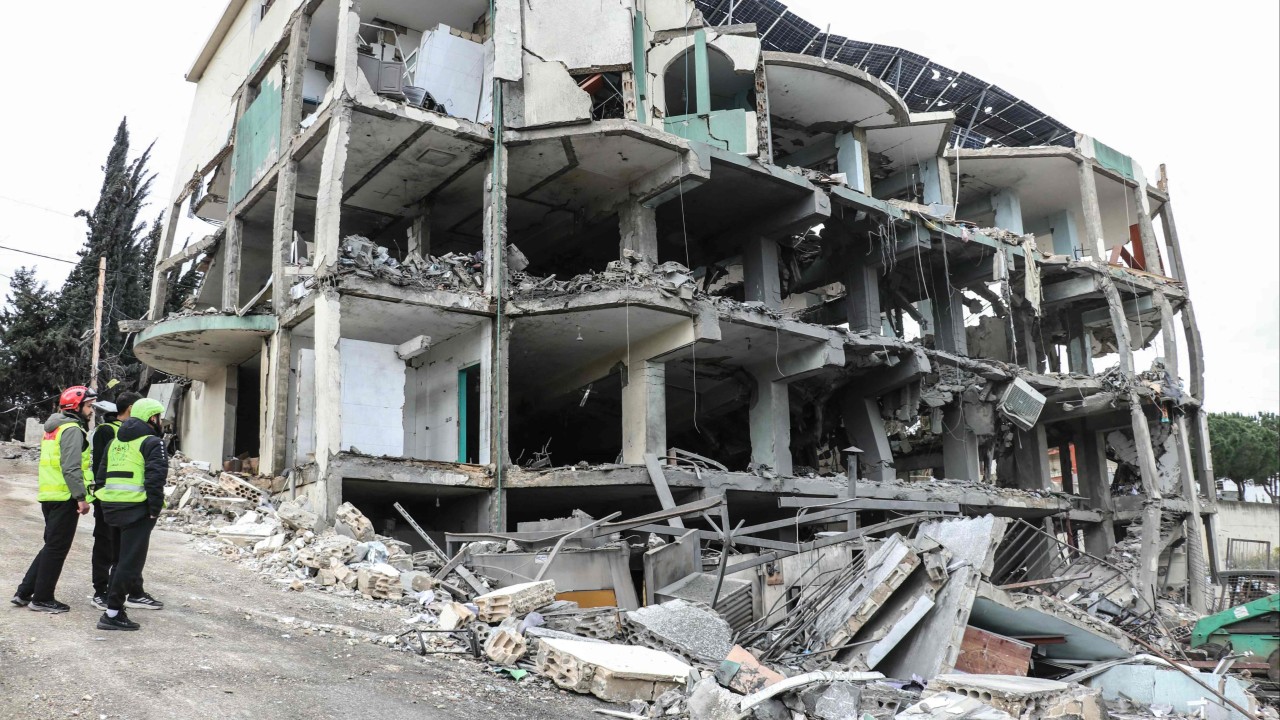
UN Secretary-General António Guterres arrived in Beirut Saturday insisting "diplomatic avenues are available" to end the week-old war between Israel and Hezbollah, even as Israeli strikes killed 12 medical workers overnight and brought the total paramedic death toll to 26. The juxtaposition reveals the gulf between diplomatic optimism and battlefield reality.
Lebanon was dragged into this latest Middle East conflagration after Hezbollah attacked Israel in response to US-Israeli strikes that killed Iranian Supreme Leader Ayatollah Ali Khamenei. What began as retaliation has escalated into systematic destruction of Lebanese civilian infrastructure, with Israeli evacuation orders now covering 14 percent of Lebanese territory and displacing 816,000 people.
The targeting of medical personnel follows a disturbing pattern. Lebanon's health ministry accuses Israel of "repeatedly targeting ambulance crews while they were performing rescue duties," while Israel claims Hezbollah uses ambulances militarily. Three Ghanaian UN peacekeepers were wounded earlier this month. Guterres called attacks on peacekeepers "completely unacceptable" and said they "may constitute war crimes."
Guterres launched a $325 million humanitarian appeal during his "solidarity" visit, but his diplomatic rhetoric rings hollow against the tactical reality. Israeli evacuation orders force vulnerable populations from areas that cannot guarantee civilian safety, which Guterres acknowledged "inevitably becomes in violation of international humanitarian law." Yet he still insisted diplomacy could succeed where military force has failed.
The UN chief's strategy hinges on empowering the Lebanese government, which committed last year to disarming Hezbollah. But that government lacks the capability to enforce such a commitment while under bombardment. Guterres urged the international community to "step up your engagement, empower the Lebanese state and support the Lebanese Armed Forces," but offered no mechanism to protect those forces from becoming targets themselves.
The timing exposes the fundamental weakness of multilateral diplomacy. Guterres speaks of dialogue while medical workers die in their clinics and pregnant women give birth on roadsides. His special coordinator engages "with all actors around the clock," but those actors continue shooting. The diplomatic process assumes good faith from parties whose immediate interests lie in escalation, not de-escalation.
What happens next depends less on UN resolutions than on military calculations in Tel Aviv and Tehran. Hezbollah leader Naim Qassem has declared readiness for "a long confrontation," while Israel shows no signs of limiting its targeting criteria. The $325 million humanitarian appeal may provide temporary relief, but it cannot address the strategic drivers pushing both sides toward wider conflict.
Middle East conflict escalation drives oil premium while systematic infrastructure targeting threatens broader regional stability.
Transmission
Energy markets price war risk while systematic civilian targeting suggests prolonged conflict that could spread to other regional actors.
Time Horizons:M=MinutesH=HoursD=DaysW=WeeksMo=Months
▲Brent Crude Oil FuturesBZ=Fbullish
Middle East conflict escalation drives risk premium into energy markets
MHDWMo
▲Middle East Defense ETFMIDDbullish
Prolonged conflict increases defense spending across regional militaries
MHDWMo
▼Lebanese Sovereign BondsLEBANObearish
Systematic infrastructure destruction and displacement crisis devastate economic fundamentals
MHDWMo
◆Regional AirlinesUAE, Qatar, Turkishvolatile
Airspace closures and routing changes create operational uncertainty
MHDWMo
▲VIX Volatility IndexVIXbullish
Geopolitical escalation drives safe-haven demand and market uncertainty
MHDWMo
Deeper context
What’s Missing
Coverage lacks crucial details about the military command structure directing these operations and the specific rules of engagement governing targeting decisions. No source explains why diplomatic channels that failed to prevent this escalation would succeed in ending it, or addresses the fundamental strategic interests driving both sides toward prolonged conflict rather than negotiated settlement.
Historical Parallel
This echoes the 2006 Israel-Hezbollah war, when similar diplomatic initiatives failed while civilian infrastructure was systematically destroyed. That conflict ended only after 34 days when both sides reached military exhaustion, not because international pressure or UN resolutions changed the strategic calculus. The current pattern suggests a similarly protracted engagement until military objectives are achieved or resources depleted.
Who’s Affected
Winners include arms suppliers and regional powers using proxies to test military capabilities. Losers encompass Lebanese civilians, medical workers, and UN peacekeepers caught in crossfire. Missing voices include Lebanese military commanders who must implement disarmament commitments without adequate resources, and regional powers like Saudi Arabia and Egypt whose stability depends on containing this conflict before it spreads.
Original source text
Verbatim descriptions from source feeds — unedited, as received
SCMP(center)
UN chief Antonio Guterres has said that diplomatic channels remain open to end the war between Israel and Iran-backed Hezbollah and urged the international community to support Lebanon.
“There is no military solution, only diplomacy, dialogue and full implementation of the UN Charter and Security Co
Read full original ›AFP / France 24(center)
An overnight Israeli strike killed a dozen medical staff at a clinic in south Lebanon, health authorities said earlier Saturday, after Iran-backed Hezbollah's leader Naim Qassem said his group was ready for a long confrontation with Israel. Lebanon was drawn into the Middle East war last week when t
Read full original ›UN News(center)
In a solidarity visit to the war-ravaged capital of Lebanon, the UN chief on Friday announced a flash humanitarian appeal of $308.3 million to support civilians there, after ongoing Israeli strikes countering rocket launches from Hezbollah left around 816,000 Lebanese internally displaced, a figure
Read full original ›UN News(center)
As the UN Secretary-General touched down in Beirut on Friday in solidarity with the people of Lebanon, UN agencies highlighted the dangers for civilians and particularly pregnant women and migrant workers, amid ongoing airstrikes and rocket fire between Hezbollah fighters and Israel.
Read full original ›AFP / France 24(center)
Lebanon's health ministry said Saturday that Israeli strikes had killed 26 paramedics and wounded 51 others since conflict erupted between Israel and Hezbollah. The ministry statement also accused Israel of repeatedly "targeting ambulance crews while they were performing rescue duties", after the Is
Read full original ›Middle East Eye(lean-left)
Israeli strikes kill 26 paramedics in Lebanon: Lebanese health ministry
Lebanon's health ministry confirmed on Saturday that Israeli strikes have killed 26 paramedics and wounded 51 others since the conflict between Israel and Hezbollah erupted.
Earlier, Lebanese authorities said an overnight
Read full original ›Agent research pack
4 sources · 6 evidence links
Swarm Claim
Lebanon says 26 paramedics were killed in Israeli strikes since March 2.
SCMP · link
UN chief says ‘diplomatic avenues are available’ to end war in LebanonUN Secretary-General António Guterres arrived in Beirut Saturday insisting "diplomatic avenues are available" to end the week-old war between Israel and Hezbollah, even as Israeli strikes killed 12 medical workers overnight and brought the total paramedic death toll to 26. The juxtaposition reveals the gulf between diplomatic optimism and battlefield reality.
AFP / France 24 · link
Israeli strike kills 12 medics in a clinic in southern LebanonAn overnight Israeli strike killed a dozen medical staff at a clinic in south Lebanon, health authorities said earlier Saturday, after Iran-backed Hezbollah's leader Naim Qassem said his group was ready for a long confrontation with Israel. Lebanon was drawn into the Middle East war last week when t
UN News · link
UN chief launches major humanitarian appeal from war-torn LebanonIn a solidarity visit to the war-ravaged capital of Lebanon, the UN chief on Friday announced a flash humanitarian appeal of $308.3 million to support civilians there, after ongoing Israeli strikes countering rocket launches from Hezbollah left around 816,000 Lebanese internally displaced, a figure
UN News · link
Middle East war: Women in Lebanon forced to give birth on roadsideAs the UN Secretary-General touched down in Beirut on Friday in solidarity with the people of Lebanon, UN agencies highlighted the dangers for civilians and particularly pregnant women and migrant workers, amid ongoing airstrikes and rocket fire between Hezbollah fighters and Israel.
Discussion
— onchainConnect your wallet to join the discussion.
No comments yet. Be the first to share your take.