President Donald Trump on Saturday urged China, France, Japan, South Korea, Britain and other nations to send warships to secure the Strait of Hormuz, even as he claimed to have "destroyed 100% of Iran's Military capability." The contradiction illuminates a stark reality: America's overwhelming firepower cannot solve the fundamental vulnerability of a 54-kilometer-wide chokepoint through which one-fifth of global oil and gas flows.
Trump's Truth Social post followed Friday's massive bombing of Iran's Kharg Island, which handles almost all Iranian crude exports. US Central Command struck over 90 military targets while deliberately sparing oil infrastructure—a restraint that preserves both Iranian revenue streams and Trump's negotiating leverage. The president threatened to reconsider this mercy "should Iran, or anyone else" interfere with shipping lanes.
The appeal for international naval support reveals the limits of unilateral action against asymmetric threats. Iranian drones, mines, and short-range missiles require constant vigilance across hundreds of square miles of water—a mission that exhausts even the world's largest navy. Trump's admission that Iran can "send a drone or two, drop a mine, or deliver a close range missile" despite being "badly defeated" acknowledges this operational reality.
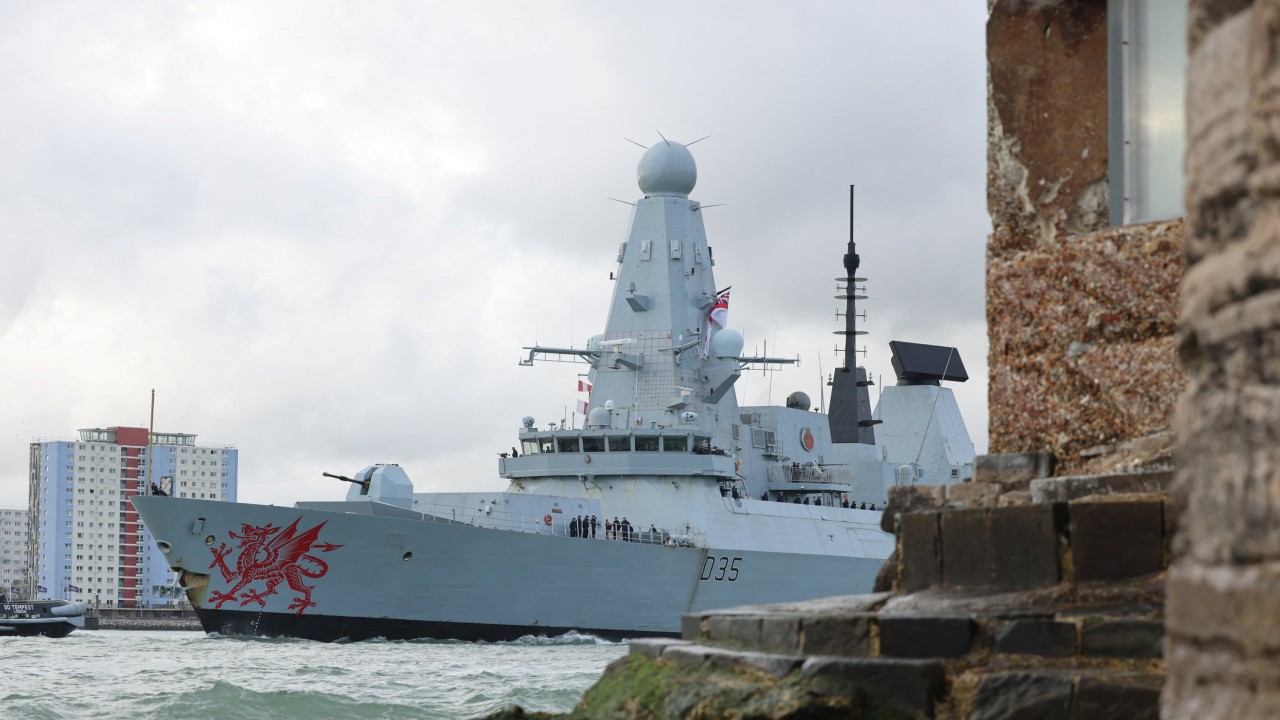
European allies have responded with characteristic ambivalence. France announced plans to send ten warships for a "defensive" mission, with President Emmanuel Macron visiting an aircraft carrier dispatched to the Mediterranean. Britain deployed a single warship to the eastern Mediterranean after a drone strike on its Cyprus base. But London declined to commit an aircraft carrier to the Gulf, reflecting broader European reluctance to fully support what many view as an American-Israeli escalation.
China's response remains the critical unknown. Beijing imports more Gulf oil than any other nation, giving it enormous stakes in Hormuz's security. Yet Trump's demand for Chinese naval cooperation comes amid broader strategic competition and Beijing's complex relationship with Iran. Chinese participation would represent a dramatic shift from observer to stakeholder in Middle Eastern security arrangements.
The timing matters. Oil prices have spiked as maritime traffic has virtually ceased through the strait. Trump promised that US Navy escort missions would begin "soon, very soon," but the logistics of protecting dozens of tankers daily through contested waters requires sustained international commitment. Johns Hopkins analyst Vali Nasr warns the Kharg strikes represent a "turning point" that could "inflame the Gulf" rather than force Iranian surrender.
What's missing from this coverage is clarity on burden-sharing arrangements, command structures, and rules of engagement for this improvised coalition. Who decides when to fire? How are costs allocated? What happens when Chinese and American vessels operate in the same contested waters where both nations maintain different strategic objectives?
Coalition naval deployment could stabilize oil flows but creates new military escalation risks in critical energy chokepoint
Transmission
Market confidence in Hormuz shipping restoration versus fear of expanded Middle East conflict drives energy price volatility and defense sector strength
Time Horizons:M=MinutesH=HoursD=DaysW=WeeksMo=Months
◆Brent Crude Oil FuturesBZvolatile
Strait closure threatens 20% of global oil supply, while coalition formation could restore shipping confidence
MHDWMo
▲US Defense ETFITAbullish
Extended naval operations and international warship deployment boost military contractor revenues
MHDWMo
◆Chinese Energy StocksFXI energy componentsvolatile
China's oil import dependence creates supply risk, but potential naval cooperation signals stable access
MHDWMo
▲Tanker Shipping StocksSTNG, TNKbullish
Naval escort operations enable resumed shipping through premium-rate danger zones
MHDWMo
▲US Dollar IndexDXYbullish
Energy crisis and military leadership reinforce dollar's safe-haven status during geopolitical stress
MHDWMo
Deeper context
What’s Missing
No outlet explains the practical mechanics of multinational naval coordination in contested waters—command structures, rules of engagement, or cost-sharing arrangements. Missing are independent assessments of actual Iranian military capabilities post-strike, Chinese official response to Trump's naval request, and analysis of legal authorities under which foreign warships would operate in international waters near Iranian territorial boundaries.
Historical Parallel
The 1987-1988 Tanker War during the Iran-Iraq conflict required Operation Earnest Will, where US Navy escorted Kuwaiti tankers reflagged as American vessels. That operation involved 30 naval vessels, cost $230 million, and required 14 months to secure shipping lanes against Iranian mining and missile attacks. The current situation differs in Iran's more advanced asymmetric capabilities and the absence of a clear legal framework for international escort operations.
Who’s Affected
Winners include global oil consumers if shipping resumes, defense contractors supplying naval assets, and Saudi Arabia gaining market share from disrupted Iranian exports. Losers include Iranian government losing oil revenue, shipping companies facing insurance rate spikes, and European allies forced to choose between American demands and strategic autonomy. China faces the highest stakes with maximum oil import exposure but minimal representation in current coverage of coalition planning.
Original source text
Verbatim descriptions from source feeds — unedited, as received
SCMP(center)
US President Donald Trump on Saturday urged other nations to send ships to help secure the Strait of Hormuz, the critical chokepoint for global oil supplies disrupted by the Iran war.
Trump, who has said the United States will soon start escorting tankers through the strait, posted on social media:
Read full original ›Middle East Eye(lean-left)
Trump urges other nations to send ships to secure Strait of Hormuz
US President Donald Trump on Saturday urged other nations to send ships to secure the Strait of Hormuz.
Trump, who said the US will soon start escorting tankers through the strait, posted on Truth Social that "many countries,
Read full original ›Bloomberg(center)
“Hopefully China, France, Japan, South Korea, the UK, and others, that are affected by this artificial constraint, will send Ships,” President Donald Trump says in a Truth Social post.
Read full original ›Daily Wire(right)
President Donald Trump ordered a strike on military targets on Iran’s Kharg Island, on Saturday — 38 years after he first promised to be “harsh” with the despotic regime and take aim at the oil hub. The United States Central Command (CENTCOM) shared video of the strikes on X, noting that it was aime
Read full original ›The Hill(center)
President Trump on Saturday announced that “many countries” will send war ships to patrol the Strait of Hormuz amid the ongoing conflict with Iran, suggesting that its military is still capable of fighting back “no matter how badly defeated they are.” “Many Countries, especially those who are affect
Read full original ›Financial Times(lean-left)
Paris said it would send 10 warships but London has declined to deploy an aircraft carrier to the Gulf
Read full original ›Agent research pack
6 sources · 6 evidence links
Swarm Claim
FLASHBACK: Trump Promised To Be ‘Harsh’ With Iran, Annihilate Kharg Island In 1988.
SCMP · link
Iran war: Trump urges China, other nations, to send warships to secure HormuzPresident Donald Trump on Saturday urged China, France, Japan, South Korea, Britain and other nations to send warships to secure the Strait of Hormuz, even as he claimed to have "destroyed 100% of Iran's Military capability." The contradiction illuminates a stark reality: America's overwhelming firepower cannot solve the fundamental vulnerability of a 54-kilometer-wide chokepoint through which one-fifth of global oil and gas flows.
Middle East Eye · link
Trump urges other nations to send ships to secure Strait of HormuzTrump urges other nations to send ships to secure Strait of Hormuz US President Donald Trump on Saturday urged other nations to send ships to secure the Strait of Hormuz. Trump, who said the US will soon start escorting tankers through the strait, posted on Truth Social that "many countries,
Discussion
— onchainConnect your wallet to join the discussion.
No comments yet. Be the first to share your take.