
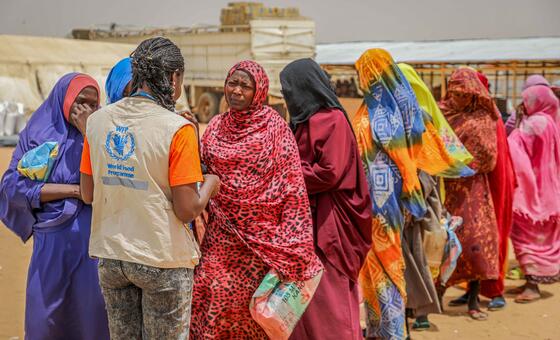
In Chad, over a million Sudanese refugees brace for bleak prospects as international funding dwindles amidst a protracted civil conflict at home. The cutbacks jeopardize critical food, shelter, and healthcare provisions just as the war in Sudan approaches its third year. Originally a temporary measure, refugee camps have become semi-permanent havens for thousands like Malik Abdullah, a Sudanese father who fled the violence with his family, now grappling with the prospect of scarce resources.
The hesitancy in funding stems not from a lack of generosity but rather displacement fatigue and competing global crises funneling donor resources elsewhere. Yet, the implications of these budget slashes extend beyond immediate hunger or discomfort. They portend public health disasters, escalate local tensions, and potentially destabilize the less than robust state structures of host nations like Chad, exacerbating the strain on already fragile infrastructures.
UN News highlights the grim situation, asserting the necessity of sustained intervention to avert cascading humanitarian failures. The report places focus on the staggering statistics without delving deeply into the lived experiences of the individual refugees. Emphasizing the cyclical nature of displacement without innovative solutions risks normalizing such crises.
While outlets like the World Bank Blog stress on governance and resilience in response to South Sudan's developmental challenges, they often overlook the human face of such statistics. The systemic approach, though critical, obscures the urgency needed at ground zero in refugee encampments, where each cut in aid has tangible repercussions, impacting lives like Malik's directly.
Despite a deafening silence from global power brokers and media alike, the realities on the ground disclose a stark calculus: resources are finite, but the number of displaced increases, meaning some benefit at the expense of others. A harsh but accurate depiction of the current geopolitical economy where aid recipients find themselves competing against each other rather than the structural conditions that perpetuate their plight.
Questions linger about accountability and strategic mishaps, like why efforts to resolve the root causes of displacement are faltering at their inception. Stakeholder voices, especially those from refugee communities and local leaders, remain muffled amidst the cacophony for international political maneuvers. The question is not simply how much aid can be sent, but how can these crises be addressed at their core, avoiding perennial cycles of dependency.
As a new fiscal year looms, April resolves could hold key developments for both policy changes or further cuts. Stakeholders must watch for donor nation budget announcements and potential interventions by international bodies that might revise the current strategy or push for peace negotiations that have stalled thus far. The global lens needs adjusting to maintain focus on these "forgotten" crises.