
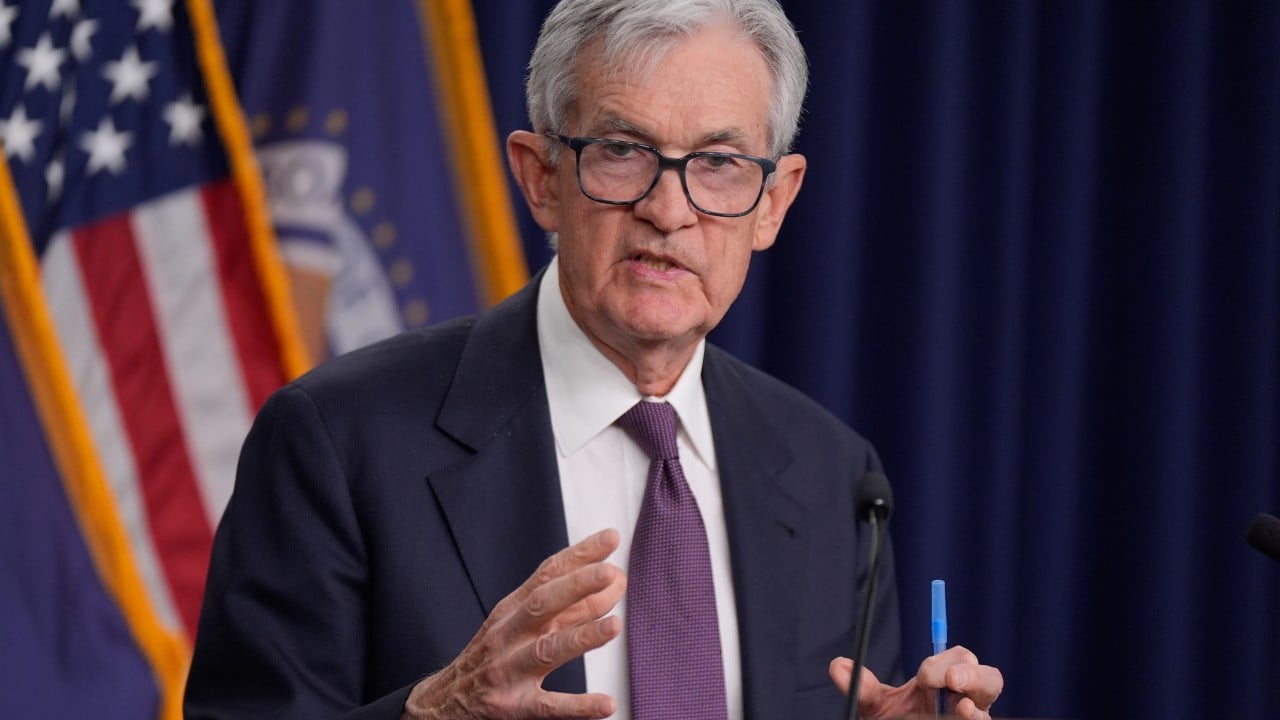
The US Federal Reserve left interest rates unchanged at 3.50%-3.75% on March 18, 2026, in an 11–1 vote that defied President Donald Trump’s public demands for immediate cuts. The decision, announced as oil prices surged 50% following US-Israel strikes on Iran, reflects a central bank straddling inflation, labor market weakness, and the seismic economic uncertainty of a Middle East war. The Fed’s dissenting vote, cast by Governor Stephen Miran, underscored a split: one policymaker saw room to cut rates amid “rising concerns about the jobs climate,” while the majority huddled closer to their dual mandate—curbing inflation near 2% and preserving maximum employment.
The Fed’s caution is rooted in a collision of forces. Since the war began, crude oil prices have spiked, threatening to rekindle inflation after five years of struggle. The central bank’s updated projections now expect 2.7% PCE inflation by year-end, up from 2.4% earlier, and GDP growth of 2.4%—a number that masks fragile labor market data. Job gains have been stubbornly low, with the unemployment rate unchanged for six quarters. Yet officials remain wary of acting unilaterally against geopolitical turbulence. “The implications of developments in the Middle East for the US economy are uncertain,” read the statement, a stark acknowledgment of volatility the Fed cannot control.
Cross-source synthesis reveals a consensus on the risks but diverging narratives about responsibility. The *Times of India* emphasizes oil-driven inflation fears and Trump’s political push to slash rates, noting that his nominee, Kevin Warsh, advocates lower borrowing costs. Bloomberg highlights markets’ immediate reaction—a plunge in stocks as investors soured on rate cut hopes. CNBC details the Fed’s “uncertain” language, while SCMP frames the standoff as a clash between Trump’s populist economics and technocratic prudence. All omit one crucial factor: the human cost. No source interviews Iranian civilians or Iraqi small business owners whose economies are collapsing alongside oil markets.
The Fed’s calculus extends beyond numbers. By projecting only one rate cut by 2026’s end, officials signal a preference for stability over political expediency. Trump’s war with the central bank—exemplified by his open calls for Powell’s removal and Justice Department subpoenas—adds legal and institutional risks. The conflict over Powell’s tenure, now entangled with Senate Banking Committee resistance, suggests that whoever replaces him in May will inherit a central bank under siege from a president whose grasp of macroeconomic levers is limited to soundbites.
What’s missing from the coverage: a reckoning with how small businesses, already battered by interest rate spikes, will absorb further inflation. No source explores the disproportionate impact of energy costs on low-income households, nor provides granular data on regional economic dislocations in oil-dependent states like Nevada or California. The Fed’s “solid” GDP projections ignore the asymmetry of growth: 2.4% overall, but uneven across sectors.
The forward path hinges on three triggers: (1) the durability of the Iranian war’s economic shock—will oil prices stabilize, or keep climbing? (2) Whether Trump’s legal challenges force Powell into a prolonged chairmanship and delay Warsh’s confirmation; (3) A surprise in core inflation data. Investors should watch PCE prints in late Q2 and the May FOMC meeting. The stakes are systemic: a misstep now risks either fueling a debt bubble or triggering a recession as the Fed fumbles its mandate.
WIRE SUMMARY: The US Fed kept interest rates steady amid Iran war-driven oil volatility, defying Trump’s calls for cuts. Officials signaled one rate reduction by year-end as inflation projections rose to 2.7%. Markets reacted cautiously to the Fed’s “uncertain” stance on Middle East conflict impacts.
BIAS NOTES: All sources report factual details accurately but frame implications differently. SCMP leans toward framing Trump as a destabilizing political force, while TOI emphasizes PPI data and legal battles. Bloomberg and CNBC focus on market mechanics rather than geopolitical context.
MISSING CONTEXT: No analysis on the geopolitical feedback loop: how higher oil prices may escalate the Iran conflict further, compounding economic strain. The Fed’s policy ignores the human capital lost in a war zone—a factor unlikely to appear in GDP or employment metrics.
HISTORICAL PARALLEL: The 1973 oil crisis offers a template. The Fed’s 1974 rate hikes to combat inflation amid energy shocks caused both stagflation and political backlash from Nixon’s administration. Today’s Fed risks similar outcomes if it misjudges the timing of rate cuts.
STAKEHOLDER MAP: Winners include energy giants (e.g., Exxon, Chevron) and inflation-linked bondholders. Losers are mortgage borrowers and small businesses. Unrepresented voices: Iranian-Americans worried about economic sanctions spillovers, and Gulf nations navigating dual crises of war and oil market instability.