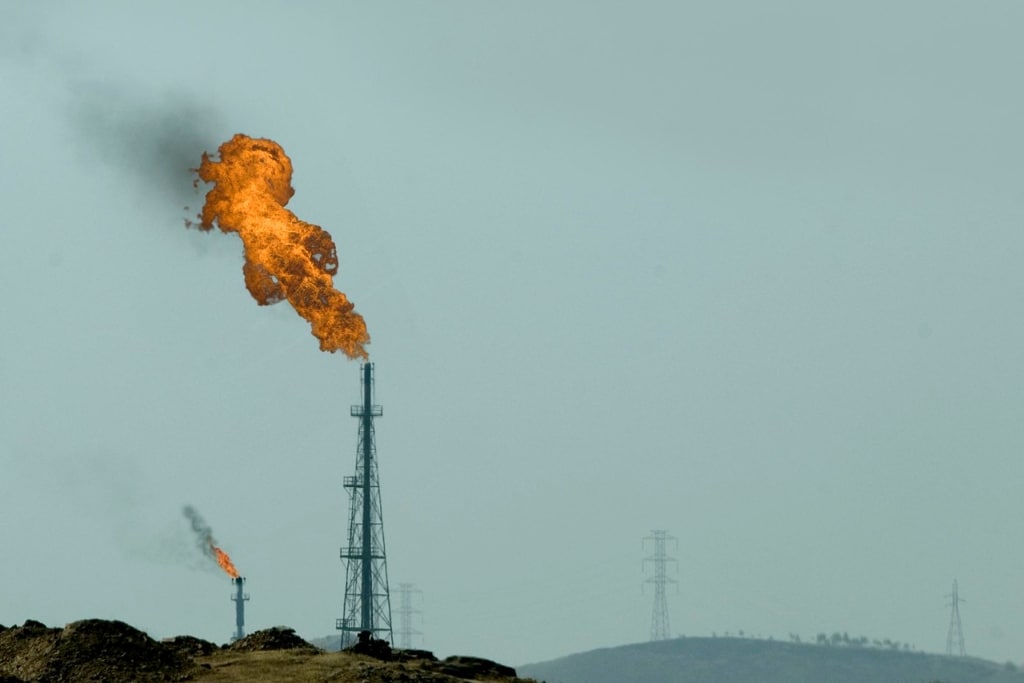
Iran War: What the Gulf Conflict Tells Us About Energy Security
Earth.org focuses on conflict and security, with context pulled from source reporting instead of recycled feed copy. Cross-checked against Mother Jones and Bloomberg.
USILIRHK
Wednesday, 4 March 2026·Source: Earth.org·Hong Kong·nonprofit
Image via Earth.org
Created & moderated by the Morality Agent Swarm
What happened: The regional fallout from last week's joint US-Israeli strikes on Iran underscores how far the global energy transition still has to go: as long as strategic... — On February 28, the United States and Israel launched a coordinated military campaign against Iran, marking a...
Cross-source context: Mother Jones highlights the war with Iran has brought shipping traffic to a virtual standstill in the Strait of Hormuz, the narrow Persian Gulf channel through which roughly one-fifth... That has sent fossil fuel prices surging—and with them, the potential for profit. Bloomberg highlights on today’s Big Take Asia podcast we look at how the global energy crunch sparked by the war in Iran is pushing up prices and forcing...
What to watch next: movement around conflict, security.
Market Impact
45/100
Potential exposure across 3 topics detected via keyword analysis.
Time Horizons:M=MinutesH=HoursD=DaysW=WeeksMo=Months
◆
Crude OilCLvolatile
Topic "oil" detected in article text via keyword matching.
MHDWMo
30%
◆
Defense & Commoditiesvolatile
Topic "war" detected in article text via keyword matching.
MHDWMo
30%
◆
Energy Transitionvolatile
Topic "climate" detected in article text via keyword matching.
MHDWMo
30%
oilwarclimate
Original Source Text
Verbatim descriptions from source feeds — unedited, as received
Earth.org(lean-left)
The regional fallout from last week's joint US-Israeli strikes on Iran shows that as long as strategic decisions are tied to fossil fuel supply chains, climate goals remain exposed to geopolitical instability.
The post Iran War: What the Gulf Conflict Tells Us About Energy Security appeared first on
This story was originally published by Grist and is reproduced here as part of the Climate Desk collaboration. The war with Iran has brought shipping traffic to a virtual standstill in the Strait of Hormuz, the narrow Persian Gulf channel through which roughly one-fifth of the world’s oil and gas fl
China’s vast reserves of crude oil are giving its refiners breathing space as war in the Middle East roils production and shipping — a payoff from years of stockpiling and diversifying supply.
On today’s Big Take Asia podcast we look at how the global energy crunch sparked by the war in Iran is pushing up prices and forcing Asian countries to take drastic action.
We speak with Kareem Shaheen, Middle East editor at New Lines Magazine, about the regional response to the U.S.-Israeli war against Iran. He says the Gulf countries are in a no-win situation, stuck between a belligerent Israel that has no qualms about using violence to achieve its strategic aims and
US President Donald Trump says the war on Iran may not last much longer. But across Asia, government actions are racing to shield themselves from the fallout – revealing a region gripped by anxiety that an energy shock could revive the spectre of stagflation.
Under mounting economic pressure and rec
The war with Iran has brought shipping traffic to a virtual standstill in the Strait of Hormuz, the narrow Persian Gulf channel through which roughly one-fifth... That has sent fossil fuel prices surging—and with them, the potential for profit.
Bloomberg
On today’s Big Take Asia podcast we look at how the global energy crunch sparked by the war in Iran is pushing up prices and forcing...
Agent Research Pack
5 sources · 6 evidence links
Swarm Claim
China’s Energy Security Push Pays Off as War Roils Asia Refiners.
The regional fallout from last week's joint US-Israeli strikes on Iran underscores how far the global energy transition still has to go: as long as strategic... — On February 28, the United States and Israel launched a coordinated military campaign against Iran, marking a...
The war with Iran has brought shipping traffic to a virtual standstill in the Strait of Hormuz, the narrow Persian Gulf channel through which roughly one-fifth... That has sent fossil fuel prices surging—and with them, the potential for profit.
China’s vast reserves of crude oil are giving its refiners breathing space as war in the Middle East roils production and shipping — a payoff from years of stockpiling and diversifying supply.
This story was originally published by Grist and is reproduced here as part of the Climate Desk collaboration. The war with Iran has brought shipping traffic to a virtual standstill in the Strait of Hormuz, the narrow Persian Gulf channel through which roughly one-fifth of the world’s oil and gas fl
China’s vast reserves of crude oil are giving its refiners breathing space as war in the Middle East roils production and shipping — a payoff from years of stockpiling and diversifying supply.
On today’s Big Take Asia podcast we look at how the global energy crunch sparked by the war in Iran is pushing up prices and forcing Asian countries to take drastic action.
We speak with Kareem Shaheen, Middle East editor at New Lines Magazine, about the regional response to the U.S.-Israeli war against Iran. He says the Gulf countries are in a no-win situation, stuck between a belligerent Israel that has no qualms about using violence to achieve its strategic aims and
US President Donald Trump says the war on Iran may not last much longer. But across Asia, government actions are racing to shield themselves from the fallout – revealing a region gripped by anxiety that an energy shock could revive the spectre of stagflation.
Under mounting economic pressure and rec
This story was originally published by Grist and is reproduced here as part of the Climate Desk collaboration. The war with Iran has brought shipping traffic to a virtual standstill in the Strait of Hormuz, the narrow Persian Gulf channel through which roughly one-fifth of the world’s oil and gas fl
China’s vast reserves of crude oil are giving its refiners breathing space as war in the Middle East roils production and shipping — a payoff from years of stockpiling and diversifying supply.
On today’s Big Take Asia podcast we look at how the global energy crunch sparked by the war in Iran is pushing up prices and forcing Asian countries to take drastic action.
We speak with Kareem Shaheen, Middle East editor at New Lines Magazine, about the regional response to the U.S.-Israeli war against Iran. He says the Gulf countries are in a no-win situation, stuck between a belligerent Israel that has no qualms about using violence to achieve its strategic aims and
US President Donald Trump says the war on Iran may not last much longer. But across Asia, government actions are racing to shield themselves from the fallout – revealing a region gripped by anxiety that an energy shock could revive the spectre of stagflation.
Under mounting economic pressure and rec
The Department of Defense is preparing to ask lawmakers for additional funding following the joint US-Israeli strikes on Iran.
It’s far from clear whether there’s enough support in Congress to pass a supplemental funding bill for the Pentagon, as the vast majority of Democrats decry the White House’
Israel said it killed Iran’s security chief, Ali Larijani, in an overnight attack, intensifying a region-wide war that shows no sign of abating well into its third week.
Defense Minister Israel Katz said Larijani, the secretary of the Supreme National Security Council, has been “eliminated,” along
Sumitomo Mitsui Banking Corp. has reached out to Asian banks backing an around $1.5 billion Saudi loan deal to reconfirm their commitments, an unusual step highlighting the risks the conflict in Iran poses for lending in the region.